Climate-related hazards can have significant implications
for demand on health care services.

Impact on infrastructure
Storms, floods, wildfires, and extreme temperature events can create emergencies by damaging infrastructure and compromising access to critical resources.

Increased use of services due to health impacts
Poor air quality and increased risk of infectious diseases can result in more hospital visits, require additional resources, and increase waiting times.

To help health care organisations prepare for these coming challenges, the Canadian Coalition for Green Health Care is proud to have offered Climate Change Resiliency Mentoring.
Slide

Climate change could be the biggest global health threat of the 21st century. Effects on health of climate change will be felt by most populations in the next decades and put the lives and wellbeing of billions of people at increased risk. During this century, the earth’s average surface temperature rises are likely to exceed the safe threshold of 2°C above pre-industrial average temperature. – The Lancet

previous arrow
next arrow

Seeing that Earth Day is an annual Earth awareness day that demonstrates support for the environment, it is quite fitting to learn about the harmful impact humans have had on the environment over the past century and a half. This video illustrates the national greenhouse gas emissions of various countries around the world, from 1850 to 2016. This provides quite the insight and needs to be taken seriously if we plan on getting back on track to save the environment, the atmosphere and ultimately, Earth itself.

National Greenhouse Gas Emissions, 1850 to 2016

Video Source: https://youtu.be/GRIhFuGZyPc 

About

A November 2014 report from the Intergovernmental Panel on Climate Change stated with high confidence that “Health impacts [of climate change] include greater likelihood of injury and death due to more intense heat waves and fires, increased risks from foodborne and waterborne diseases, and loss of work capacity and reduced labour productivity in vulnerable populations… Globally, the magnitude and severity of negative impacts will increasingly outweigh positive impacts.”

Increasing atmospheric and ocean temperatures bring with them increased frequency and severity of storms, epidemics, heat waves, and other natural disasters that can affect the health care system:

  • Storms, floods, wildfires, and extreme temperature events can create emergencies by damaging infrastructure and compromising access to critical resources. Damaged hospital infrastructure or interrupted supply chain access can endanger patients, visitors, and staff, and disable care services when they are needed most.
  • Warmer temperatures bring increased risk of food-, water-, and vectorborne infectious diseases.
  • Increased emissions combined with extreme humidity can result in poor air quality, exacerbating respiratory conditions in vulnerable populations.
Climate Change in Canada

Canada’s rate of warming is about twice the global rate: a 2°C increase globally means a 3 to 4ºC increase for Canada. Effects will persist for centuries because greenhouse gases (GHGs) are long-lived and the oceans are warming. Cumulative CO2 emissions largely determine ultimate warming. A 2°C warming target may still be attainable, but we are already 65% of the way to the associated carbon limit or budget and global emissions must peak before mid-century. GHG emissions need to become net zero in order to stabilize climate at any temperature (NRCan).

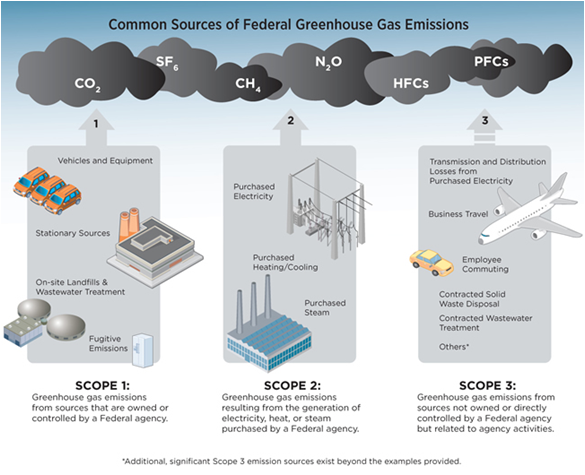
Greenhouse gas (GHG) emissions in Canada are driven by a number of factors, such as economic and population growth as well as the mix of energy supply. Emissions in Canada’s commercial and residential buildings increased by 14 Mt between 1990 and 2005, and then remained relatively stable around the 2005 levels through to 2011. Since 1990 buildings have accounted for about 12% of Canada’s GHG emissions in any given year. The stability in emissions since 2005 is attributed mainly to energy retrofits, as 40% of all building floor space has seen some level of energy retrofit between 2005-2009. 

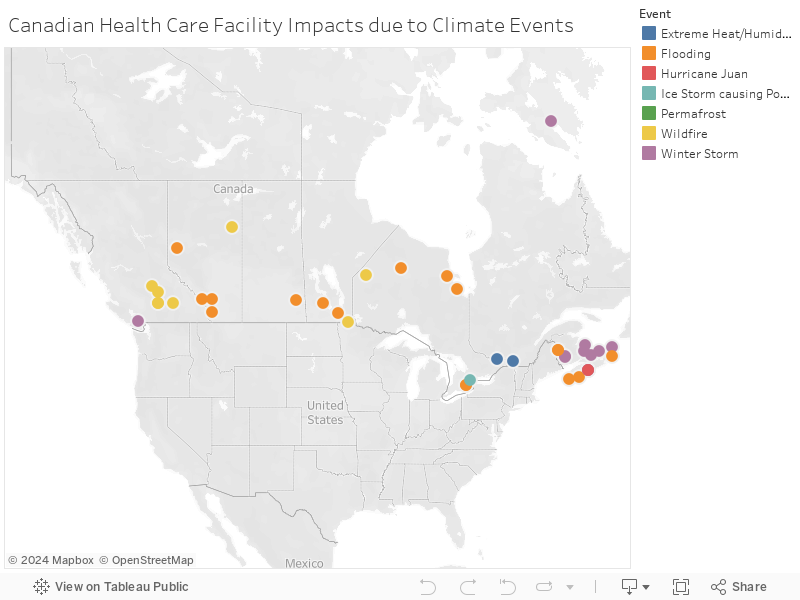
Canadian Health Care Facility Impacts due to Climate Events


Extreme Weather

 
Canadians across the country can be vulnerable to the health impacts of thunderstorms and lightning, snow storms, freezing rain, tornadoes, hurricanes, and hailstorms – particularly when widespread power outages occur and where health, social, and emergency services are insufficiently robust to handle large or concurrent events. – Natural Resources Canada, 2014
 
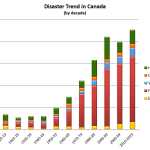
Globally, the number of reported weather-related natural disasters is increasing. Climate change has driven extreme high temperatures and has probably contributed to more frequent and extreme precipitation events and more intense tropical cyclone activity. Together, these trends will increase the risk of weather-related hazards to human health. – World Health Organization, 2011
 

Source: Research Group at Public Safety Canada


Extreme Heat

Extreme heat events are an increasing concern in Canada and abroad. As the climate changes, the frequency, intensity and duration of these events are expected to increase, as are their related adverse health effects. In recent years, extreme heat has resulted in a significant number of preventable deaths. – Health Canada, 2011

Extreme heat events pose serious health risks to Canadians; for example, they are associated with sudden, short-term increases in mortality, especially among older adults, people who are chronically ill, people on certain medications and the socially disadvantaged. A 2009 extreme heat event in British Columbia contributed to 156 excess deaths in the province’s lower mainland area and in 2010 an extreme heat event in Quebec resulted in an excess of 280 deaths. – Natural Resources Canada, 2014


Vector-borne Disease

Climate change may affect health risks from both zoonoses and vector-borne diseases. Surveillance data indicates that Lyme vectors (as a proxy for Lyme disease risk) are spreading into Canada at a rate of 35-55 km per year and are following climate-determined geographic trajectories. – Natural Resources Canada, 2014
 
Climatic factors like temperature and precipitation interacting with shifts in trade, travel, land use, and demographics are likely to affect the occurrence of vector-borne disease…around the world. Water-borne disease replication, survival, persistence, and transmission are subject to environmental influences and do best under warmer conditions such as those projected for the future. – The Resource Innovation Group, 2012


Food Supply

Climate affects crop productivity, animal production, virility of pests and diseases, pollinator health and water availability and quality. Climate changes will necessitate changes in human activities (e.g. cropping systems, use of irrigation) and lead to flora and fauna reactions. – Natural Resources Canada, 2014
 
Severe weather events and rising temperatures are likely to cause a decline in livestock productivity. Higher heat places stress on animals, which reduces dairy production and slows growth and conception rates. Marine fish population and distribution are already changing due to higher ocean temperatures. – The Resource Innovation Group, 2012
 

Above: USA crop yields over time. Despite technological improvements that increase corn yields, extreme weather events have caused significant yield reductions in some years. Source: USGCRP (2009)

Federal/Provincial/Territorial Working Groups

A Pan‑Canadian Framework on Clean Growth and Climate Change is in progress. Provincial, territorial, and federal governments are working together to encourage clean economic growth, reduce greenhouse gas emissions, and prepare for the impacts of climate change.

The Working Group on Adaptation and Climate Resilience is one of four working groups established at the direction of Canadian First Ministers in the Vancouver Declaration. It is led by a federal and a provincial co-chair, and is composed of members from federal, provincial, and territorial governments.

Click to read the Resilient Health Care Submission for the consideration of Federal/Provincial/Territorial Working Group on Adaptation and Climate Resilience.

Canada-Wide Coal Phase Out

Coal is a major contributor of greenhouse gas emissions, and talk is well underway to phase out its use in Canada. 

In May 2016, The Canadian Association of Physicians for the Environment (CAPE) blogged about Health Professionals Calling for an End for Coal. On September 2nd, a CAPE press release highlighted negotiations by several Canadian provinces to completely phase out coal plants by 2030. 

We will continue to post updates here as more information becomes available.

Resources

From Impacts to Adaptation: Canada in a Changing Climate 2007
Canada’s Marine Coasts in a Changing Climate
Canada in a Changing Climate: Sector Perspectives on Impacts and Adaptation
Managing Climate Risks: Highlights for Business Leaders
Adapting to Climate Change
Adapting to Our Changing Climate in Canada (poster)
 

Digest Highlights

Each of the following climate change-related stories have been featured in The Green Digest. You can the complete Digest archive here.


Videos


HEALTH SCIENCES CENTRE –
MANITOBA HYDRO


Health Sciences Centre (HSC) is the largest health centre in Manitoba. In 2014, HSC installed new high efficiency chillers to reduce GHG emissions and improve energy efficiency. HSC now saves $184,000 in energy costs every year.

MANAGING CLIMATE RISKS TO
WELL-BEING AND THE ECONOMY


The Adaptation Sub-Committee’s progress report 2014 considers preparedness to climate change in England related to major infrastructure, business, public health and emergency planning. This video highlights case studies where positive action is being taken to reduce the risks of climate change.

ROBUST HOSPITALS
IN A CHANGING CLIMATE


A film examining how existing National Health Service hospital architecture may be refurbished to become more resilient to extreme summer heatwaves. This film is one of the outputs from a major EPSRC-funded research project undertaken by Cambridge, Loughborough, Leeds and the Open universities.